
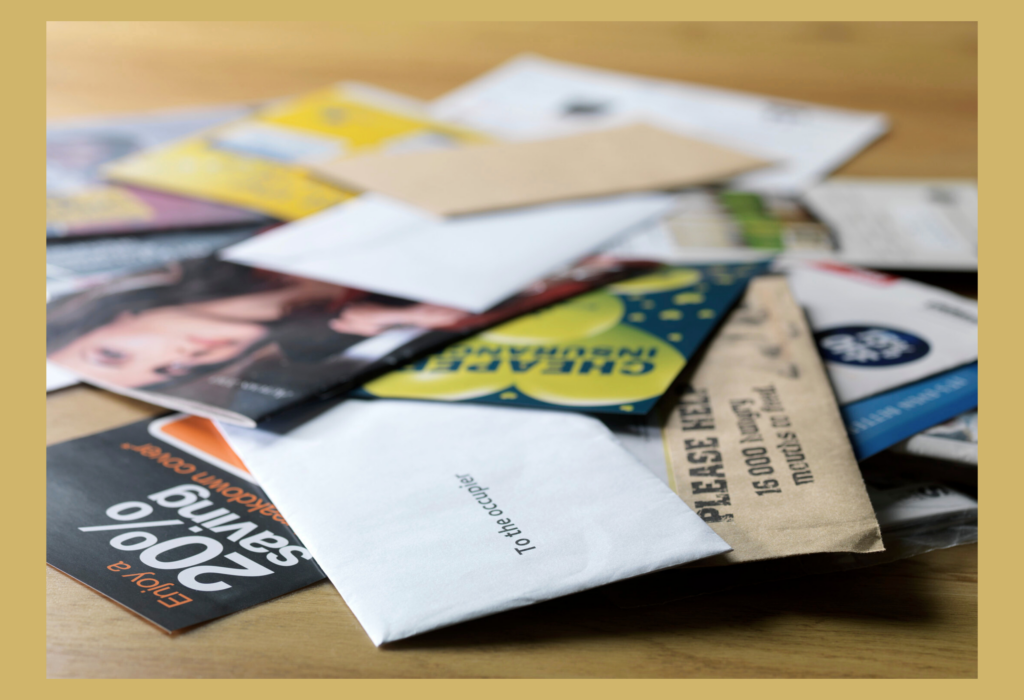
Why Tabbing Isn’t Optional
If you’re sending folded self-mailers or booklet-style pieces without envelopes, there’s one critical detail that can make or break your mailing: tabbing.
What is tabbing?
Tabbing is the process of applying small adhesive seals—called tabs or wafer seals—to secure the open edges of unenveloped mail pieces so they don’t open as they move through postal processing equipment. There are specific requirements from the United States Postal Service (USPS) for tabbing to qualify for automation pricing and postage automation discounts.
Here’s why it matters: USPS automation equipment moves mail at extremely high speeds. If a folded piece opens, it can:
- Jam sorting machines
- Damage your mail
- Be rejected or charged higher postage
- Delay delivery
Proper tabbing ensures your piece qualifies as machinable, which will keep postage costs down. Understanding tabbing rules saves you from rejected mailings, wasted printing costs, and missed deadlines
The Basic Rule: Secure All Open Edges
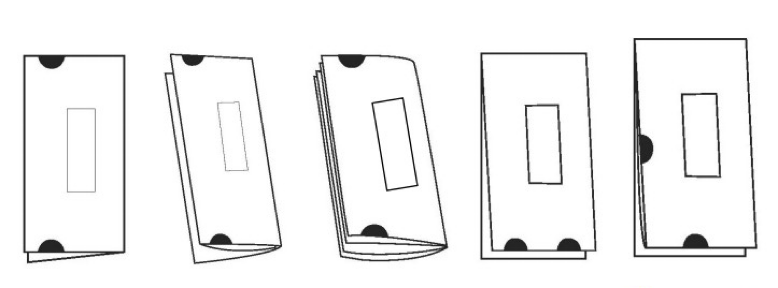
The basic principle is simple: any open edge that could catch in processing equipment must be secured. How you secure it depends on your mail piece design, paper weight, and which edge is folded or bound. The USPS has specific tabbing requirements for how many tabs you need and exactly where they must be placed based on your self-mailer’s characteristics.
USPS Self Mailer Tabbing Guidelines
Letter-Size Folded Self-Mailers: What You Need to Know
For letter-size folded self-mailers (standard letter dimensions), the most important factor is where your folded edge is located and how heavy your paper stock is.
Folded Edge at Bottom (Most Common)
When your folded edge is at the bottom or leading edge of your mail piece, you have two options based on paper weight:
Single Tab Option: If you’re using a single folded sheet with minimum 70# basis weight paper (or two or more sheets with minimum 60# basis weight), you can use just one tab positioned on the top edge of the mail piece, centered between the two edges.
Two Tab Option: For lighter paper stock—minimum 50# basis weight—you’ll need two tabs placed within one inch of the right and left edges of the top of your mail piece. This provides extra security for lighter weight materials.
Folded Edge at Top or Bottom
If your design places the folded edge at either the top or bottom, you can use two tabs with minimum 50# basis weight paper. Tabs must be placed within one inch of the right and left edges of the mail piece.
Folded Edge on Right
This orientation is less common but sometimes necessary for specific designs. When the folded edge is on the right leading edge, both the left trailing edge and the top edge must be secured—each with at least one tab or a continuous glue line.
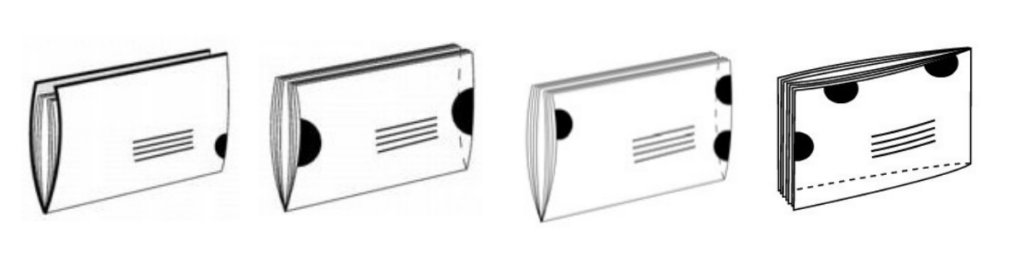
Booklet-Type Mailers: More Complex Requirements
Booklet-type mailers—any piece that uses saddle-stitching or staples along a spine—have more variables to consider. Number of pages, paper weight, size, and binding method all affect tabbing requirements.
Because booklet specifications can vary significantly, these pieces often require consultation to ensure the number and placement of tabs needed.
USPS Booklet Tabbing Guidelines
Getting It Right: Practical Guidance
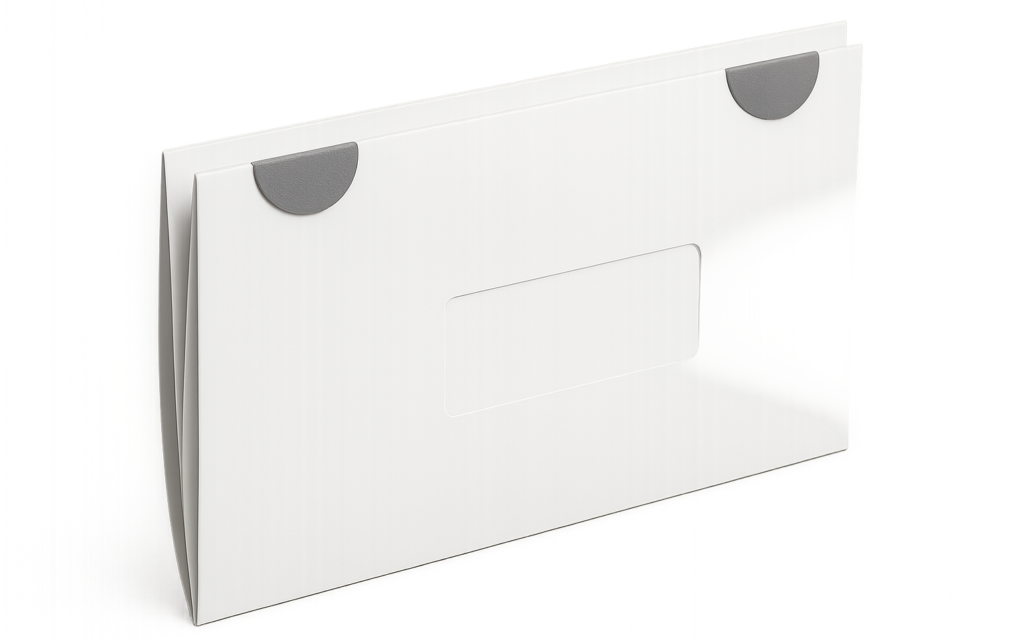
- Start with your paper weight. Know the basis weight of your paper stock before finalizing your design. Basis weight is the weight of a ream (500 sheets) of paper used to indicate the paper’s thickness and strength. This determines your minimum tabbing requirements.
- Consider fold placement early in your design process. Where you place your fold directly affects both tabbing requirements and how smoothly your piece processes through automation equipment.
- For booklets, consider your binding placement early. The binding edge orientation, combined with page count, paper weight, and trim size, determines how many tabs you’ll need and where they must be placed.
- Don’t guess on booklets. If you’re producing a stitched or stapled piece, consult with your mail service provider or review USPS guidelines carefully. Booklet requirements have multiple variables that aren’t always intuitive.
- Test before you print. If you’re designing a new mail piece, have a physical mockup reviewed by your mail service provider before committing to full production. Catching a tabbing issue before printing can save thousands of dollars.
The Bottom Line: Protecting Your Mailing Investment
Tabbing requirements exist for good reason—they protect your mail investment and ensure reliable delivery. Getting tabbing right the first time means your mail qualifies for automation pricing, moves through the postal system without issues, and arrives at its destination in perfect condition.
If you’re planning a self-mailer campaign and want to ensure compliance, Metro Presort can review your design, confirm tabbing requirements, and handle production to USPS specifications—so your mail gets delivered without surprises. Contact us now!